NEWS
DIAGEO TOOK INDIAN REGULATOR’S SALES BAN ORDER TO COURT
By Staff Reporter
17-8-2026
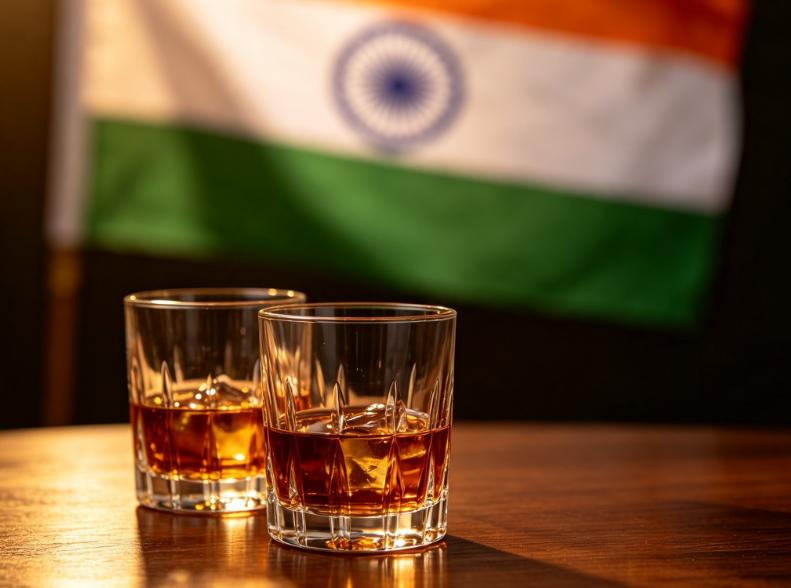
Source: AI photo
India’s national food safety regulator, the Food Safety and Standards Authority of India (FSSAI), has issued prohibition of sale orders against a portfolio of well known whisky and rum lines produced by United Spirits Limited, Diageo’s Indian operating subsidiary, over alleged non compliance concerning flavour additive usage and misleading product labelling, sending ripples across the country’s vast domestic spirits trade.
United Spirits has pushed back against the rulings. The company has filed a writ petition at the Bombay High Court contesting the sales restriction against McDowell’s No.1 rum.
In its court filings, Diageo’s Indian arm contends that the prohibition was issued without following full statutory adjudicatory due process, and that its existing labelling framework aligns with long‑standing domestic industry norms and prevailing regulations at the time of production.
The business also highlighted that FSSAI had simultaneously opened wider‑ranging industry consultations over flavour labelling standards, which, it argued, made the immediate enforcement order premature.
The Bombay High Court has so far declined to grant interim relief, and has directed the federal authorities to file their response by 19 August, leaving the disputed sales restrictions in place in the interim.
Wider industry observers frame the crackdown as a landmark tightening of standards for India’s Indian‑Made Foreign Liquor segment, a market valued at roughly USD 40 billion annually.
Beyond Diageo, local producers including Inbrew Beverages and Mohan Rocky Springwater have also seen some of their own whisky and rum lines hit by parallel FSSAI stop‑sale notices on broadly similar compliance grounds.
For Diageo, which has repeatedly identified India as one of its high priority long‑term growth markets, the regulatory dispute comes amid a broader stretch of heightened official scrutiny.
Just days after the flavour‑labelling ban was announced, state inspectors quarantined around 18,000 cases of Diageo product in Bengaluru over separate packaging marking irregularities relating to recycled plastic bottle certification, adding further operational headwinds for the group’s Indian division.
The enforcement action, rolled out in earlier this month, targets specific production batches rather than brand‑wide national bans.
Affected Diageo labels include variants of Royal Challenge and Antiquity Blue whisky manufactured at its Madhya Pradesh facility, alongside certain expressions of McDowell’s No.1 Celebration Matured Rum produced at its Baramati distillery in Maharashtra.
Laboratory testing commissioned by FSSAI identified that the flagged products contained artificial or nature identical flavour compounds formulated to replicate the intrinsic sensory profile of whisky and rum.
The regulator’s core objection is that such additions cannot be used to substitute flavour naturally derived from fermentation, distillation and barrel maturation.
Under Indian alcoholic beverage rules, items relying on this type of added character should instead be labelled as “whisky flavoured spirit” or “rum flavoured spirit” with prominent front‑of‑pack disclosure, rather than marketed as standard whisky or rum.
“There is no internationally recognised manufacturing practice whereby rum flavour is added to rum or whisky flavour is added to whisky,” FSSAI noted in its public guidance, stressing that the crackdown is not a blanket ban on all flavourings within Indian spirits, but a clampdown on deceptive labelling when added flavours mask the beverage’s genuine character.
Separately, a confidential regulatory notice reviewed by trade media also raised concerns over what FSSAI considered misleading maturation claims on some Diageo whisky packaging.
Regulators challenged statements such as “matured in American oak casks”, arguing that large portions of those blends comprised unaged extra‑neutral grain spirit, and therefore could not legitimately carry broad ageing assertions on product labels.
Trade analysts point out that while the currently restricted product lines are mass market blends rather than Diageo’s premium imported portfolio, the outcome of the ongoing legal challenge will likely set important precedents governing how domestic spirit producers can formulate, name and market blended brown spirits across India for years ahead.
United Spirits said in a short public statement that it continues to cooperate constructively with FSSAI, while defending its manufacturing and labelling practices, and would not comment further on matters now before the courts.
(the writer can be contacted at: info@thewinechronicle.com)
ALL RIGHTS RESERVED
**IF YOU THINK THE WINE CHRONICLE IS WORTH SUPPORTING, PLEASE MAKE A DONATION TO HELP US IMPROVE AND CONTINUE OUR WORK**
TRENDING│ FOCUS│ MISSION│ ABOUT US│ CONTACT
| 