NEWS
SOUTH KOREA’S ALCOHOL CONSUMPTION HITS 7-YEAR LOW
By Staff Reporter
22-6-2026
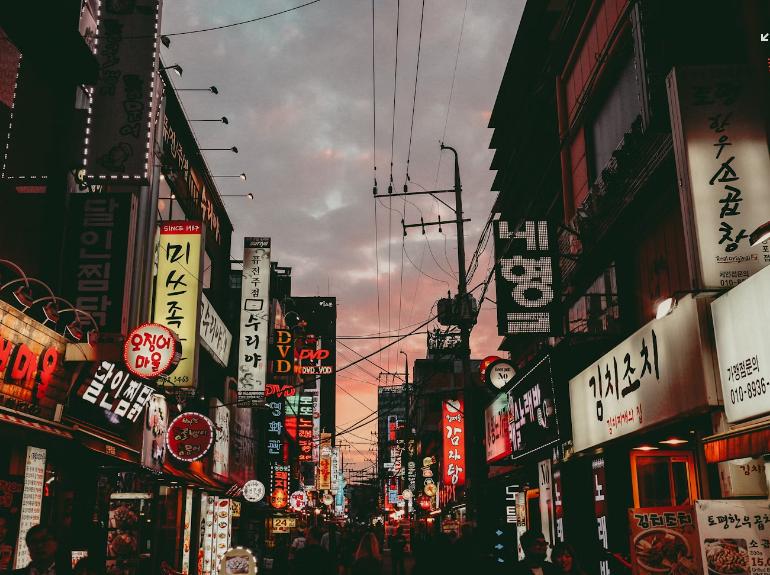
Source: Unsplash
Official statistics released by Korea Statistics Data Agency reveal South Korea’s household spending on alcoholic beverages slumped to a seven-year low in the first quarter of 2026.
Real monthly household expenditure on alcohol averaged just WON13,000 (USD9.40) between January and March, falling 9 percent year-on-year.
This represents the steepest single-quarter decline since revised quarterly consumption tracking launched in 2019, and extends an unbroken losing streak stretching across 10 consecutive quarters dating back to late 2023.
Nominal liquor spending also contracted 7.5 percent annually, its eighth straight quarterly drop, erasing seasonal sales bumps that historically accompanied Lunar New Year and Chuseok holiday gatherings.
The consumption decline cuts across all age demographics, with middle-aged households leading the pullback.
Households headed by residents in their 50s posted the sharpest spending drop at 10.2%, followed by those aged 60 and above (-6.9 percent), adults aged 40–49 (-5.1 percent), and consumers under 40 (-5.7% percent).
Younger generations stand out as the core driver of the broader sober shift: a 2024 Korea Disease Control and Prevention Agency survey found 56 percent of 19–29-year-olds either abstain entirely or drink less than once monthly, rejecting mandatory post-work company drinking sessions known locally as hoesik.
Long-standing structural changes to Korean social norms lie behind the prolonged downturn.
Pandemic-era curfews normalised early home departures, while rising wellness awareness, cost-of-living pressures, and a rejection of workplace drinking obligations have reshaped leisure priorities.
Industry data underscores the decade-long erosion of volume: total domestic alcohol shipments in 2024 totalled 3.15 million kilolitres, a 17.3 percent drop from 2014 levels.
Local food service operators have borne the brunt, with roughly 3,000 small bars and street drinking stalls shutting their doors nationwide in 2025 amid falling on-premise alcohol orders.
Against the contracting mainstream liquor market, two high-growth subsegments have emerged as life lines for manufacturers including HiteJinro and Lotte Chilsung.
Retail tracking from major hypermarket chain Emart shows low-calorie light beer sales surged 32 percent year-on-year, while non-alcoholic beer volumes rose 21 percent despite overall beer sales slipping 6.4 percent in 2025.
Korea’s iconic soju producers have responded by slashing alcohol content for their flagship lines.
HiteJinro recently reformulated its top-selling Chamisul Fresh down to 15.7 percent ABV, matching Lotte Chilsung’s entry-level Cheoeum Cheoreom, as brands compete to deliver milder, lower-proof spirits tailored to mindful drinkers.
Flavoured fruit soju ranges have also been expanded, with companies accelerating export distribution across Southeast Asia to offset soft domestic demand.
Industry analysts note the “sober curious” trend is no longer a temporary fad but a permanent cultural reset.
Where Korean social interaction once revolved around multi-round late-night drinking, consumers now opt for café meetups, outdoor sports and zero-alcohol social alternatives.
With household alcohol expenditure set to face further headwinds through 2026, major liquor groups plan to ramp up investment in non-alcoholic beverages, ready-to-drink low-ABV cocktails and overseas market expansion to stabilise revenue amid the seven-year consumption slump.
(the writer can be contacted at: info@thewinechronicle.com)
ALL RIGHTS RESERVED
**IF YOU THINK THE WINE CHRONICLE IS WORTH SUPPORTING, PLEASE MAKE A DONATION TO HELP US IMPROVE AND CONTINUE OUR WORK**
TRENDING│ FOCUS│ MISSION│ ABOUT US│ CONTACT
|